What’s up at Nevomo?

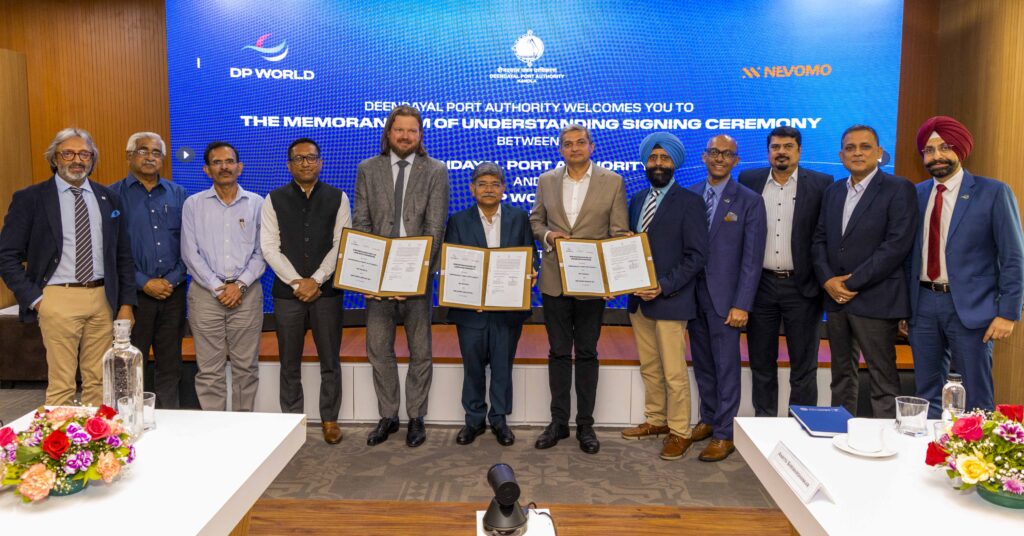
30.10.2025 Nevomo, DP World and Deendayal Port Authority enter agreement to deploy MagRail technology at port in India
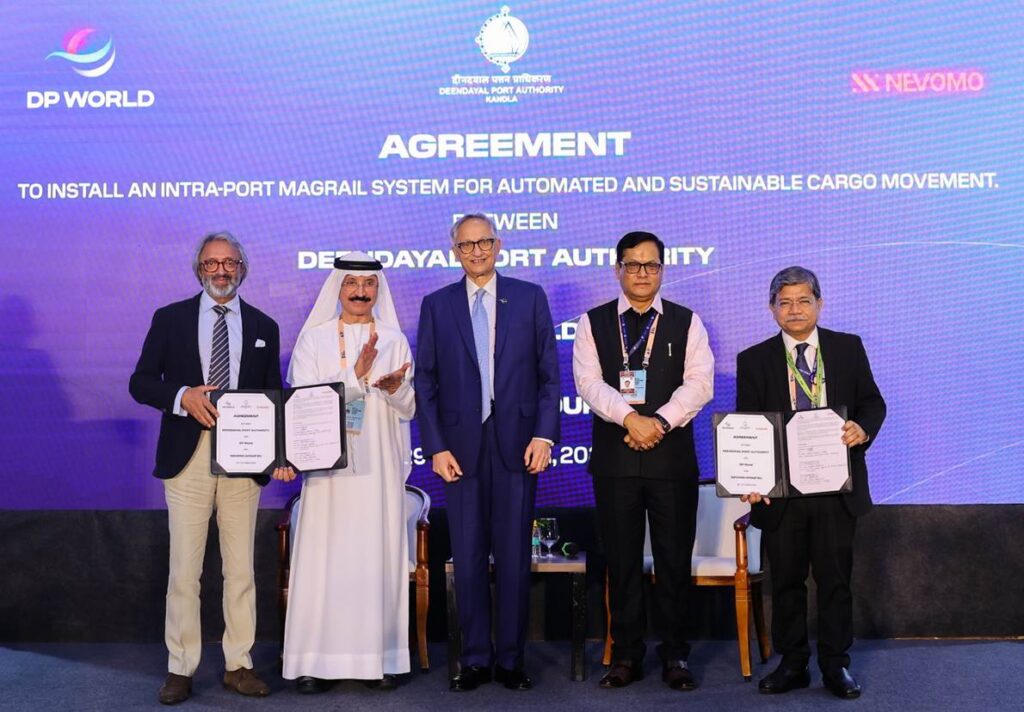
Nevomo has signed an Agreement with DP World and Deendayal Port Authority (DPA) to deploy a first-of-its-kind magnetic propulsion solution that enables self-propelled rail movement of bulk cargo and containers at Deendayal Port. DP World will leverage the European deep-tech company Nevomo’s proprietary MagRail Booster technology to demonstrate its use in a live Indian port environment. The initiative marks a significant step toward setting the stage for the next generation of automated, low-emission port operations in India.

Under the agreement, Deendayal Port Authority (DPA), DP World, and Nevomo will collaborate to design and install a 750-metre MagRail Booster pilot track within the port. The system will demonstrate fully automated and sustainable cargo movement using existing rail infrastructure, reducing the need for conventional locomotives while improving port capacity (throughput), efficiency and safety. Alongside this installation, a strategic feasibility study will assess the potential for large-scale deployment of MagRail technology across Indian ports, aligned with the Government of India’s PM Gati Shakti Master Plan and the Harit Sagar Green Port Guidelines.

The implementation of MagRail technology marks a major advancement in modernising cargo movement within the port ecosystem. MagRail systems are designed to automate short-haul cargo transfers, which refer to the movement of goods over short distances within or near the port, such as between terminals, warehouses, and container yards.

MagRail equipment will be installed directly onto the existing rail tracks and existing rolling stock modified, requiring no new track construction, ensuring minimal disruption and quicker low cost deployment. With existing track access rights in line with the project schedule, this system will help reduce reliance on diesel-powered vehicles, lower carbon emissions, and enhance yard efficiency. The implementation of advanced solutions like the MagRail will further virtually increase operational performance and position the port as a test bed for next-generation, sustainable transport technologies in India.

The agreement was exchanged in the august presence of the Union Minister of Ports, Shipping and Waterways (MoPSW), Shri Sarbananda Sonowal and H.E. Sultan Ahmed bin Sulayem, Group Chairman and Chief Executive Officer of DP World, between Shri Sushil Kumar Singh, IRSME, Chairman, Deendayal Port Authority (DPA), and Yuvraj Narayan, Deputy CEO and Chief Financial Officer of DP World, during India Maritime Week 2025 in Mumbai.

Commenting on the collaboration, Shri Sushil Kumar Singh, IRSME, Chairman, Deendayal Port Authority (DPA), said, “This partnership marks an important milestone in Deendayal Port’s journey towards technological modernisation and sustainable growth. By introducing MagRail innovation in collaboration with DP World, we are taking a decisive step towards automating cargo movement and setting new standards in operational efficiency. This initiative not only strengthens India’s port infrastructure but also reinforces our commitment to building greener, smarter gateways that support the nation’s long-term trade and logistics ambitions.”

Yuvraj Narayan, the Deputy CEO and Chief Financial Officer of DP World, said, “This agreement with Deendayal Port Authority and Nevomo marks a pivotal step in reimagining how cargo moves within India’s ports. By facilitating the implementation of MagRail technology at Deendayal Port with Nevomo, we are showcasing India’s readiness to adopt next-generation logistics that are faster, safer, and more sustainable. This initiative sets a benchmark for future port modernisation across the country turning innovation into a blueprint for scalable, greener infrastructure.”

Harjinder (Harj) Dhaliwal Acting Chief Executive Officer, Nevomo, said, “We are proud to partner with Deendayal Port and DP World to bring the MagRail technology to India – one of the most dynamic logistics markets in the world. This collaboration demonstrates how magnetic rail systems retrofitted to existing assets can enhance existing infrastructure, improving efficiency and reducing carbon emissions without costly overhauls.”

About DP World

DP World is reshaping the future of global trade to improve lives everywhere. Operating across six continents with a team of over 100,000 employees, we combine global infrastructure and local expertise to deliver seamless supply chain solutions. From Ports and Terminals to Marine Services, Logistics and Technology, we leverage innovation to create better ways to trade, minimizing disruptions from the factory floor to the customer’s door. In India, DP World serves a quarter of India’s EXIM container market with 5 container terminals with a total installed capacity of 6 million TEUs per annum. It has 3 free trade warehousing zones, 5 million square feet of warehousing space, 5 container freight stations, express logistics network covering 15000 pin codes and advanced freight forwarding expertise. It is also one of the largest private rail freight operators in India with 16000+ owned containers and 7 inland rail terminals.

About Deendayal Port Authority (DPA)

Deendayal Port’s journey began in 1931 with the construction of RCC Jetty by Maharao Khengarji. After, the independence of India in 1947, Deendayal Port’s success story continued, and it emerged to be India’s No. 1 Port in the year 2007-08 and has retained the top position for the 14th consecutive year since then. On 31.03.2016, Deendayal Port created history by handling 100 MMT cargo in a year – the first Major Port to achieve this milestone. Kandla Port, also known as the Deendayal Port. DPA is a seaport in Kutch District of Gujarat state in the western India, near the city of Gandhidham. Located on the Gulf of Kutch, it is one of major ports on the western coast. Kandla was constructed in the 1950s as the chief seaport serving western India, after the independence of India. The Port of Deendayal is located on the Gulf of Kutch on the northwestern coast of India, some 256 nautical miles southeast of the Port of Karachi in Pakistan and over 430 nautical miles north-northwest of the Port of Mumbai (Bombay). It is the largest port of India by volume of cargo handled. Deendayal Port Authority, India’s busiest major port in recent years, is gearing up to add substantial cargo handling capacity with private sector participation.

Marking a national first, the pilot explores next-generation freight movement within a live port environment to accelerate India’s transition to intelligent, sustainable logistics

DP World, the Deendayal Port Authority (DPA), and Nevomo have signed a Memorandum of Understanding (MoU) to explore potential opportunities for cooperation in the development and implementation of a pilot project using Nevomo’s MagRail proprietary technology for the self-propelled movement of rail-based cargo and freight within the existing port ecosystems.

DP World, a global leader in smart end-to-end supply chain solutions, is leading efforts to introduce advanced freight technology aimed at transforming cargo movement in India. Deendayal Port Authority (DPA), a key multi-cargo port under the Government of India, is facilitating exploration of this technology at its terminal in Kandla to evaluate the feasibility of this futuristic freight transportation system.

The initiative marks a significant step toward building faster, more efficient, and sustainable port-hinterland connectivity. This initiative is aligned with India’s National Logistics Policy and PM Gati Shakti agenda aimed at modernizing and integrating the country’s logistics infrastructure.

The MoU was signed by Shri Sushil Kumar Singh, IRSME, Chairman of Deendayal Port Authority (DPA), Rizwan Soomar, CEO & Managing Director, Middle East, North Africa, India Subcontinent, DP World, and Przemek (Ben) Paczek CEO Nevomo Group BV along with other senior dignitaries in Kandla, Gujarat, on 15th July 2025.

The MoU sets the framework for a 750-metre pilot project of MagRail technology at Deendayal Port. A first-of-its-kind initiative in India will demonstrate self-propelled freight movement within a live port environment. It aims to develop and implement MagRail-based solutions that enable autonomous, electric-powered wagons using linear motor technology on existing rail tracks, enhancing capacity, efficiency, and speed for containerized and bulk cargo while reducing costs and CO2 emissions, making the logistics systems greener, faster, and more interoperable.

Commenting on the occasion, Shri Sushil Kumar Singh, IRSME, Chairman, Deendayal Port Authority (DPA), said, “This collaboration is a strategic advancement in port infrastructure, enhancing capacity and operational efficiency to support growing cargo demands. DP World, as trusted partner, plays a crucial role in enabling this initiative, which aligns with our commitment to strengthening India’s logistics framework and ensuring seamless trade facilitation.”

Sultan Ahmed bin Sulayem, Group Chairman & Chief Executive Officer, DP World, said, “At DP World, we are committed to future-proofing our terminals by adopting innovative technologies that redefine how cargo moves through the supply chain. Piloting solutions like MagRail aligns with our focus on enhancing speed, efficiency, and sustainability in logistics. By reducing transit times and optimising infrastructure use, we aim to create greater value for customers, support Deendayal Port Authority in scaling capacity, and contribute to India’s broader trade and connectivity goals.”

Speaking at the signing ceremony, Rizwan Soomar, CEO & Managing Director, Middle East, North Africa & India Subcontinent, DP World, „We believe transformative infrastructure is driven by collaboration and long-term thinking. The partnership between DP World and Deendayal Port Authority along with Nevomo offers a unique opportunity to reimagine the future of freight movement in India. Our commitment goes beyond individual projects—we are partnering to accelerate India’s ambition to further expand and integrate port-led logistics ecosystems and achieve carbon neutrality by leveraging technology effectively in infrastructure solutions.”

Przemek (Ben) Paczek CEO Nevomo Group BV, commented, “We are proud to partner in this innovative initiative at Deendayal Port to showcase MagRail’s real-world potential in enhancing freight efficiency, capacity, and flexibility. Collaborating with world-class organisations like DP World and Deendayal Port Authority, this is a significant step towards advancing sustainable logistics in India.”

This landmark collaboration will demonstrate how MagRail technology can automate short-haul cargo transfers, reduce reliance on diesel vehicles, and improve yard efficiency. The pilot project at Deendayal Port aims to set new standards in efficiency and sustainability, showcasing how innovation can transform ports into engines of economic growth and global trade competitiveness.

About DP World

DP World is reshaping the future of global trade to improve lives everywhere. Operating across six continents with a team of over 115,600 employees, we combine global infrastructure and local expertise to deliver seamless supply chain solutions. From Ports and Terminals to Marine Services, Logistics and Technology, we leverage innovation to create better ways to trade, minimizing disruptions from the factory floor to the customer’s door.

In India, DP World serves a quarter of India’s EXIM container market with 5 container terminals with a total installed capacity of 6 million TEUs per annum. It has 3 free trade warehousing zones, 5 million square feet of warehousing space, 5 container freight stations, express logistics network covering 15000 pin codes and advanced freight forwarding expertise. It is also one of the largest private rail freight operators in India with 16000+ owned containers and 7 inland rail terminals.

About Deendayal Port Authority (DPA)

Deendayal Port Authority, located at Kandla in the Gulf of Kutch, Gujarat, is one of India’s premier and busiest major ports, strategically positioned to serve the northern hinterland. Under the Administrative control of the Ministry of Ports, Shipping and Waterways, Government of India, DPA plays a vital role in facilitating international trade and boosting the nation’s maritime economy. With a strong emphasis on infrastructure modernization, sustainability and digital transformation, DPA is rapidly evolving into a future-ready maritime hub. The Port has also taken pioneering steps toward clean energy by embracing the National Green Hydrogen Mission, positioning Kandla as a key player in India’s vision to become a global Green Hydrogen hub. Through its commitment to innovation, efficiency and environmental stewardship, DPA continues to set new benchmarks in port-led development.

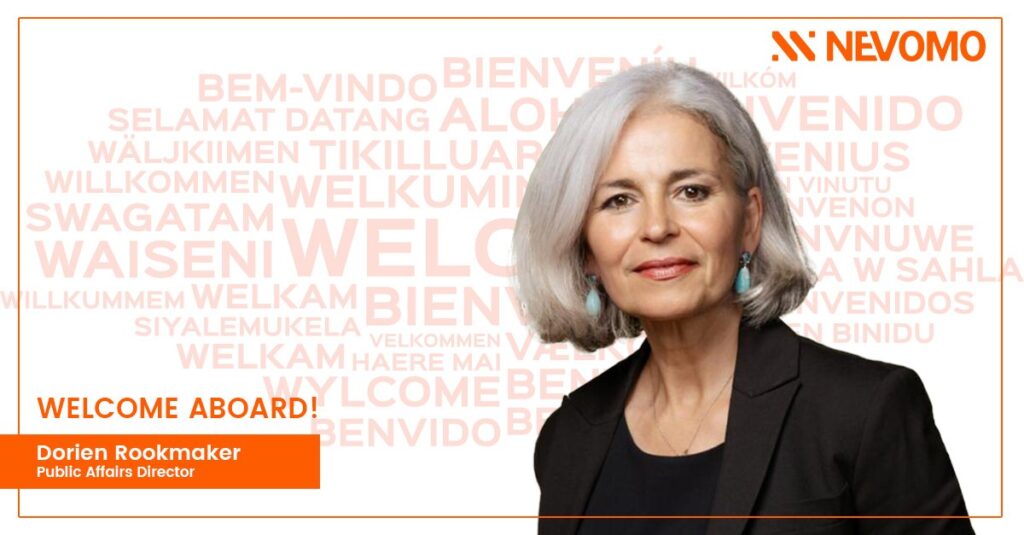
Nevomo, the European deep-tech leader behind the revolutionary MagRail technology, announces the appointment of Dorien Rookmaker as Director of Public Affairs. Rookmaker, who served as a Member of the European Parliament from 2020 to 2024, brings extensive experience in transport policy and a strong commitment to sustainable mobility.

During her tenure in the European Parliament, Rookmaker was an active member of the Committee on Transport and Tourism, advocating for the development of high-speed rail networks across Europe. Her dedication to advancing sustainable transportation solutions aligns seamlessly with Nevomo’s mission to revolutionize rail travel through innovative technologies. Before entering Parliament, she gained professional experience in the financial and railway sectors, which further strengthened her strategic vision for the future of European mobility.

“Joining Nevomo is a natural extension of my commitment to advancing high-speed rail in Europe. I am excited to contribute to a company that is not only innovating technologically but also driving meaningful change towards a more connected and sustainable continent”
Dorien Rookmaker

Rookmaker’s connection with Nevomo dates back to September 2023, when she participated in the unveiling of Nevomo’s groundbreaking achievement: the successful levitation of a railway vehicle on existing tracks using MagRail technology.

In her new role at Nevomo, Rookmaker will lead the company’s public affairs strategy, engaging with European institutions and stakeholders to promote the adoption of innovative, sustainable rail solutions.

“Dorien’s extensive experience in European transport policy and her unwavering support for sustainable mobility make her an invaluable addition to our team. Her insights and expertise will be key to our efforts to transform Europe’s rail infrastructure with MagRail technology,” said Ben Paczek, CEO and co-founder of Nevomo.

In a major milestone for the global railway sector, Texmaco Rail & Engineering Ltd., India’s premier rail solutions provider, has signed a strategic Memorandum of Understanding (MoU) with Nevomo, a European deep-tech company specializing in next-generation Magnetic Linear Propulsion and Levitation Systems (MagRail).

Nevomo is a global leader in retrofitting existing railway infrastructure with cutting-edge MaRrail technology, offering a cost-effective and scalable solution for enhancing capacity and efficiency across rail networks, ports, and industrial logistics facilities. This agreement marks a significant step toward revolutionizing autonomous freight movement, ultra-high-speed rail solutions, and advanced track maintenance technologies.

Through this partnership, Texmaco and Nevomo will collaborate on co-developing and deploying MagRail Booster technology alongside AI-driven track diagnostics to modernize rail systems.

By combining Texmaco’s extensive manufacturing expertise with Nevomo’s breakthrough railway innovations, the alliance will enhance capacity and sustainability across freight rail, ports, mining, and industrial operations. The all-electric technology will significantly reduce carbon emissions by up to 95% at ports and logistics hubs, aligning with global sustainability goals.

This collaboration further reinforces India’s ambition to become a leader in next-generation transportation by modernizing its rail and port infrastructure with cutting-edge technologies.

Key Highlights of the Strategic Agreement

  • Technology Integration & Innovation – Texmaco and Nevomo will jointly identify and develop MagRail-based solutions to enhance efficiency, increase capacity, and lower costs by integrating them into existing rail infrastructure.
  • Autonomous & Self-Propelled Freight Trains – The partnership will introduce next-generation self-propelled, driverless wagons/trains, revolutionizing cargo transportation and intermodal terminal connectivity.
  • Global Expansion – Leveraging Texmaco’s vast manufacturing capabilities and Nevomo’s technological expertise, the alliance aims to introduce autonomous rail mobility solutions across India and global markets.
  • Design & Innovation Hub – The collaboration will explore the establishment of a design and innovation centre to develop a comprehensive ecosystem of rail products and services for new markets.
  • Sustainable & Smart Mobility – The joint effort will promote eco-friendly, energy-efficient rail solutions, supporting green transportation initiatives and high-speed rail mobility.

AI-Driven Diagnostics & Automation – Cutting-edge AI-powered predictive maintenance tools will enhance track monitoring, fault detection, and automated maintenance scheduling, reducing downtime and increasing safety.

Mr. Sudipta Mukherjee, Managing Director, Texmaco Rail & Engineering Ltd., stated:

„This partnership ushers in a new era for the Indian and global rail industries. By integrating Nevomo’s groundbreaking MagRail technology with Texmaco’s engineering and manufacturing capabilities, we are set to revolutionize freight and passenger mobility. AI-driven diagnostics, autonomous self-propelled systems, and sustainable rail solutions will enhance efficiency and safety while leveraging existing infrastructure for cost-effective improvements. We believe ports, mines, and logistics hubs can significantly boost throughput with minimal capital investment.”

Mr. Indrajit Mookerjee, Vice Chairman & Executive Director, Texmaco Rail & Engineering Ltd., commented:

„Our collaboration with Nevomo reflects Texmaco’s commitment to innovation and leadership in railway technology. This partnership will introduce transformative solutions to India’s rapidly evolving rail sector, making it smarter, faster, and more sustainable. By advancing AI-driven, energy-efficient, and high-speed rail systems, we are positioning India as a global leader in next-generation transportation infrastructure.”

Mr. Harj Dhaliwal, Chief Business & Capital Programme Officer, Nevomo, added:

„We are thrilled to partner with Texmaco to introduce MagRail technology to India and global markets. By integrating advanced rail solutions into ports, logistics hubs, and India’s railway network, we will enhance connectivity, efficiency, and capacity, supporting the India–Middle East–Europe Economic Corridor vision. This partnership represents a significant leap toward modernizing rail and port infrastructure, accelerating economic growth, and strengthening India’s access to global markets. At Nevomo, we are committed to driving innovation through AI-powered diagnostics and autonomous freight mobility, paving the way for the future of sustainable rail transport.”

Mr. Przemek Ben Paczek, Founder & CEO, Nevomo, commented:

„At Nevomo, we are committed to pioneering cutting-edge rail solutions that can be seamlessly integrated into existing railway infrastructure. This partnership with Texmaco is a significant step toward modernizing India’s rail networks and enhancing its global connectivity. Our MaRrail technology offers a unique, scalable solution that enables high-speed, high-efficiency rail transport without the need for entirely new infrastructure. By leveraging AI-driven diagnostics, autonomous freight wagons, and our advanced linear motor propulsion systems, we are transforming the way railways operate—making them smarter, greener, and more efficient. This collaboration reinforces our mission to redefine rail mobility on a global scale.”

  • Nevomo set to fully automate and decarbonize industrial and intermodal logistics in the most time- and cost-efficient way
  • MagRail Booster to enable locomotive-free rail freight transport at Bremen plant
  • Funded by the federal program Future of Rail Freight Transport (Z-SGV) of the German Federal Ministry of Digital and Transport (BMDV)

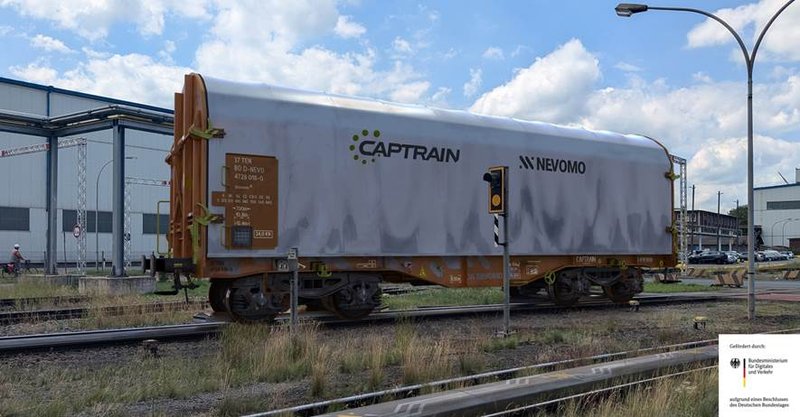
Nevomo, a European leader in magnetic rail technology, in collaboration with Hansebahn Bremen GmbH (HBB), a joint venture of rail logistics expert Captrain Deutschland and steel company ArcelorMittal Bremen, are launching a joint pilot project for automated freight transport on the Bremen factory. HBB is responsible for organising and implementing rail transport on the 100 kilometre-long rail infrastructure.

The aim is to introduce the world’s first fully automated freight wagon transport system using existing vehicles and rail infrastructure. The project will start in December 2024 and should achieve full automation within three years.

The pilot will be run under the name ‘BREMAG – Bremen Magnetic Shuttle’ and will focus on the transport of steel coils between production sites. By retrofitting the rail infrastructure with the MagRail Booster system, the shuttle operation will deliver unprecedented flexibility and frequency, minimizing delays and eliminating reliance on road transport for urgent deliveries.

‘The automation of transport and shunting services offers great potential for increasing the efficiency of rail freight transport’, says Jonas Tesch, managing director of HBB. ‘It will allow us to carry out transport operations more frequently, more reliably and more flexibly and improve our carbon footprint by reducing the use of diesel locomotives. As the Captrain Deutschland Group, we are pleased to be able to carry out this pilot project and develop this innovation.’

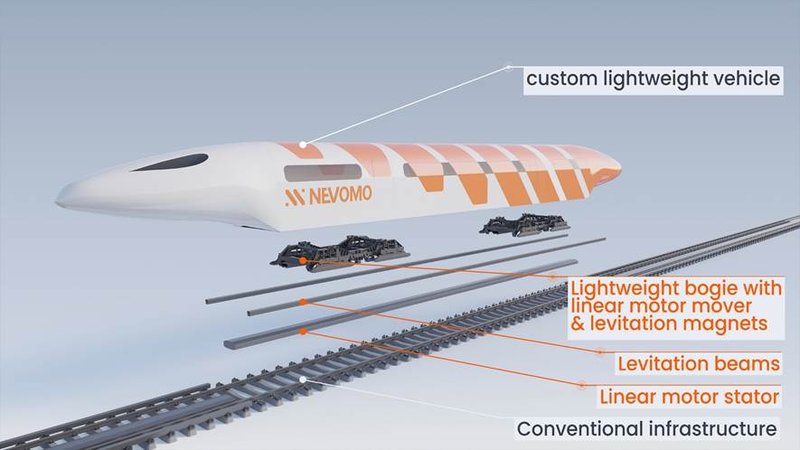
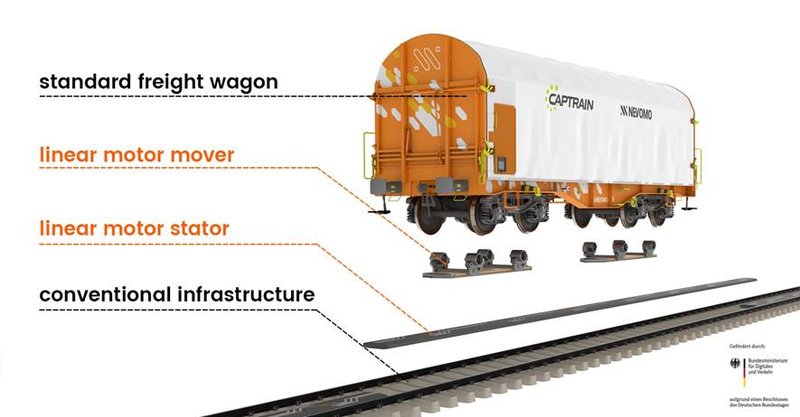
The project uses Nevomo’s MagRail Booster technology which integrates advanced linear motor technology into existing rail infrastructure, enabling autonomous, fully-automated operation of freight wagons without the need to use locomotives. Specifically, retrofitting existing rail infrastructure includes installing an active linear motor stator and equipping wagons with specially developed linear motors. This will allow the railcars to move autonomously and be controlled by a magnetic field. This innovation addresses critical challenges in rail logistics, such as increasing productivity, efficiency and operational capacity while supporting decarbonization efforts.

‘We are delighted of the trust given to MagRail Booster from such renowned rail logistics and industrial players as Captrain,’ – said Przemek Ben Paczek, CEO & Co-founder of Nevomo. „We are convinced that that the innovation in traction by replacing locomotives with linear motor-powered self-propelled wagons combined with the Rail-as-a-Service (RaaS) business model holds the key to significantly reducing the carbon footprint of logistics on a global scale.’
thumbnail_image003.jpg

‘MagRail Booster represents a transformative step for the rail industry,” said Stefan Kirch, Chief Commercial Officer and co-founder of Nevomo. ‘With BREMAG, we are not just automating rail logistics – we’re setting new standards in efficiency and sustainability in rail transportation. This project will demonstrate how our technology can seamlessly integrate into existing infrastructure, delivering both economic and environmental benefits.

BREMAG is an important milestone that demonstrates the feasibility of automating rail transport with linear motors and has a total budget of around 6 million euros. The project is supported by the federal programme ‘Future Rail Freight Transport for the Promotion of Innovation’ (Z-SGV) of the Federal Ministry for Digital and Transport Affairs (BMDV) in cooperation with the German Centre for Rail Transport Research (DZSF). The programme offers financial support to enable innovative advances in rail logistics.

About Captrain

Captrain is one of the leading rail logistics companies in Germany and Europe. Whether international traction services, plant railway operations or transport concepts individually tailored to the processes of its customers: Captrain offers innovative, customized and efficient logistics solutions. With operating locations in Germany and Poland, licences in Austria and the Czech Republic and sister companies in Belgium, France, Italy, Switzerland, Portugal and Spain, Captrain Germany has a nationwide presence and is always close to its customers. In 2023, the Captrain Germany Group achieved a turnover of 357.8 million euros with 1,331 employees.

In the age of a global movement towards green and efficient logistics solutions, the heart of Europe – Poland, where key East-West and North-South transport corridors intersect, is investing significantly in the expansion of transport infrastructure to meet the challenges of the freight sector, among others. Efficient rail infrastructure, which is the only mode of transport capable of providing green and sustainable mobility in the region, is crucial. Can the MagRail technology become the transformational force that the transport industry of the CEE region need?

The European Investment Bank emphasizes the importance of filling the gaps in the Central and Eastern European transport system for the development of the region, bringing significant economic benefits. Rail freight transport in the region, despite its potential, is facing numerous problems. Outdated infrastructure, lack of technical interoperability between countries, strong competition from road transport and insufficient investment in the rail sector are just some of the obstacles. Furthermore, sustainable transport systems that reduce emissions are needed to meet environmental policy goals. In light of these challenges, Nevomo’s MagRail Booster technology is noteworthy for its potential response.

Countries in the Central and Eastern European region, such as Poland, Lithuania, Latvia, Estonia, Romania and Bulgaria, are forced to compete with the developed countries of Western Europe, which have modern, high-speed and efficient rail infrastructure, although even these countries are now beginning to face capacity challenges on their rail systems. While the average commercial speed of freight trains in Poland is around 20-30km/h, in the west of the continent freight trains run at an average speed much higher. In many countries in the region, rail is losing out to road transport, which has greater accessibility and flexibility.

Lack of interoperability in many rail links between Central and Eastern European countries and Western Europe also do not help. In addition, inadequate cross-border connections, particularly in Romania and Bulgaria, significantly limit international transport options.

For rail freight transport to become much more competitive with road transport, in addition to increasing speed, it is necessary to ensure capacity and continuity of transport not only within the territory of European countries, but also between them. Continuity means, among other things, cross-border comparability of infrastructure standards, as well as the availability of multi-system locomotives, which is crucial for eliminating stops at border crossings, especially in transport processes that cross multiple borders….

But what if we do not need multisystem locomotives anymore?

In September 2023, Nevomo unveiled the MagRail Booster, the world’s first solution that enables the modernization of existing railcars by introducing linear motor drive. This opens up new opportunities for automating traffic, electrifying infrastructure and improving rail transportation, primarily in the industrial and intermodal logistics segments. The system can be installed on non-electrified lines and freight cars equipped with the MagRail Booster can move independently without a locomotive, either in full train sets or as single units. Interestingly, they can autonomously connect and disconnect with other cars.

„MagRail Booster makes it possible to significantly increase capacity, flexibility and freight dynamics, even on non-electrified lines. Freight cars equipped with this technology can move independently, without a locomotive, both in full trainsets and individually. Importantly, the system allows automatic coupling and uncoupling of railcars, which is a breakthrough in the autonomization of freight railways,’ explains Ben Pączek, CEO of Nevomo.

The implementation of the MagRail Booster system could not only significantly improve rail freight transport in Central and Eastern European countries, but also become a milestone in its development throughout Europe, contributing to the competitiveness of rail as an environmentally friendly alternative to road transport

The number of heavy goods road vehicles crossing the Polish borders in both transit traffic and intra-European exports and imports to and from Poland reaches tens of thousands of vehicles per day. On some cross-border routes, these streams constitute an equivalent of several dozen pairs of trains per day. Very few of those trucks carry containers. In fact, less than 2% of cross-border container traffic to and from Poland is carried by trucks. On the other hand, the logistics business in Europe relies on semitrailers that provide compatibility with other logistics equipment. Even if it is possible to load some of the intra-European cargo into containers, we need solutions that boost shifting of semitrailers onto railways.

The socio-economic goal over the coming decades is to shift the economy into a zero- or low-carbon mode. The construction of new nuclear power plants in Poland should allow to rapidly change the structure of its energy mix towards a low-carbon one, while ensuring high energy availability. Rail transport in Poland, despite the planned increases in operating performance and higher energy consumption by high-speed passenger trains and intermodal trains should be much more environmentally friendly than today.

  • Integration of MagRail system into the hyperloop GoTube project marks a new era of European transport innovation
  • Confirmation that Nevomo strategy of seamlessly combining rail with hyperloop is feasible and viable

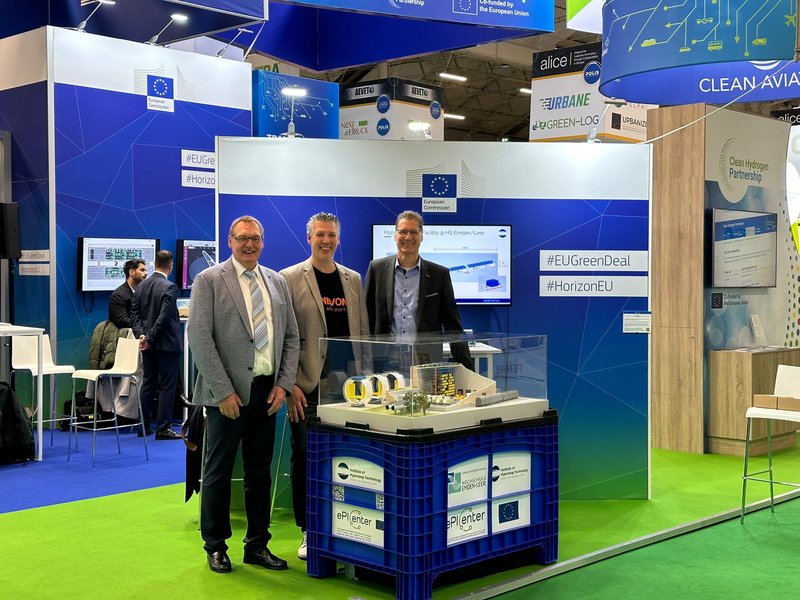
Nevomo, a leading European deep-tech company and the developer of the innovative MagRail technology, and the Institute of Hyperloop Technology (IHT) at the University of Applied ScienceEmden/Leer, Germany are entering the next phase of their strategic partnership to advance next-generation technologies for the mobility industry. A central element of this collaboration is the integration of Nevomo’s MagRail propulsion system and power electronics into the IHT’s GoTube demonstrator. The initiative will also validate the scalability and efficiency of MagRail technology, paving the way for future applications in Hyperrail and Ultra-High Speed rail systems.

’Bringing Nevomo on board as a technology partner for our GoTube project has allowed us to advance the technical development of our project,’ said Prof. Dr.-Ing. Thomas Schüning, Board of Directors, Institute of Hyperloop Technology

CargoTube is a new approach to low-pressure tube transport (LPTT) that uses proven technologies and can be rapidly deployed in freight transport. This makes it an affordable alternative and preliminary step to solutions such as complex conventional hyperloop systems. CargoTube is less costly to implement and provides lower safety and infrastructure requirements. At the same time, it is complementary and compatible with new hyperloop standards and technologies. The solution provides a number of benefits including zero direct emissions while ensuring the rapid movement of goods with great potential for sustainably linking urban areas, economic regions and manufacturing plants.

‘The implementation of magnetic propulsion for CargoTube paves the way for a completely contactless guided and levitating system for high-speed applications,’ said Prof. Dr. Walter Neu, Board of Directors, Institute of Hyperloop Technology.

Nevomo’s proven track record in developing scalable solutions for both conventional and maglev rail transport not only provides a solid foundation for enhancing future systems’ interoperability and multimodality but is a game changer in streamlining and developing high-speed transport across Europe and worldwide. What’s more, Nevomo’s incremental approach to implementing hyperloop-inspired technologies will finally be able to be reliably tested in a controlled hyperloop environment, preparing the ground for the future steps in the development of technologies such as MagRail / Maglev and Hyperloop.

‘Europe has already once missed an opportunity to be a leader in ultra-high-speed rail by abandoning the maglev (Transrapid) project in the first decade of the 21st century, resulting in the implementation and development of this technology in China. The partnership between Nevomo and the Institute of Hyperloop Technology will proof that a seamless link of railway and hyperloop is technically doable, via MagRail as a bridging technology. We are very proud to have the University of Applied Sciences Emden/Leer as our partner,’ said Stefan Kirch, Chief Commercial Officer & Co-Founder, Nevomo.

Nevomo’s advanced MagRail technology uses passive maglev based on linear propulsion. By ensuring interoperability with existing rail systems and extending multimodality, it can allow Europe to regain its leading role in innovation in the area of sustainable mobility.

Following successful testing of magnetic levitation-based MagRail technology and an electromagnetic propulsion-based MagRail Booster with a linear motor on its own test track, MagRail will be presented in an operational hyperloop demonstrator of the University of Applied Sciences in Emden.

About the Institute of Hyperloop Technology

The Institute of Hyperloop Technology (IHT) was founded 2021 at the University of Applied Sciences Emden/Leer. IHT is focused on Hyperloop development and applications, both in physics and engineering sciences. The Institute of Hyperloop Technologies serves as system integrator by developing, validating and integrating hyperloop technologies for a sustainable new mode of transportation. Thus, the Institute aims to establish an international consortium to foster a Large-Scale Hyperloop Research and Technology Facility in Europe, operational at real life conditions. This joint effort of the private sector and academia in an open research network will accelerate the development of a standardized European Hyperloop ecosystem.

In a new report, “Elevating rail in Europe: technology upgrades for greener transport,” global management consultancy Oliver Wyman has identified advanced rail technologies – such as passive magnetic levitation (maglev) – as critical to moving forward on the goal of achieving a high-performing, carbon-neutral pan-European long-distance transport network.

Advanced technologies capable of being integrated with existing rail infrastructure and equipment could be a faster and less costly way to achieve European green transport goals than adding new infrastructure – as well as a stepping stone to yet more advanced systems, like hyperloop.

Nevomo’s advanced MagRail technology uses passive maglev based on linear propulsion, which allows rail vehicles to levitate on existing rail infrastructure at speeds of up to 550 km/h. Nevomo is a pan-European deep-tech company that is developing the hyperloop-inspired next generation of high-speed rail. Successful testing of MagRail was completed in September 2023 and Nevomo is exploring potential uses for MagRail in conjunction with major European rail and port industry players.

According to the objectives of the European Green Deal, CO2 emissions must be reduced by 55% by 2050; this would include a reduction of more than 70% of emissions in the transport sector. Although rail is seen as a driver of greener transport, there are currently significant physical constraints to infrastructure, resulting in capacity problems on important routes.

Current annual CO2 emissions by mode of transport in Europe compared to potential emission reductions tied to phased technology changes
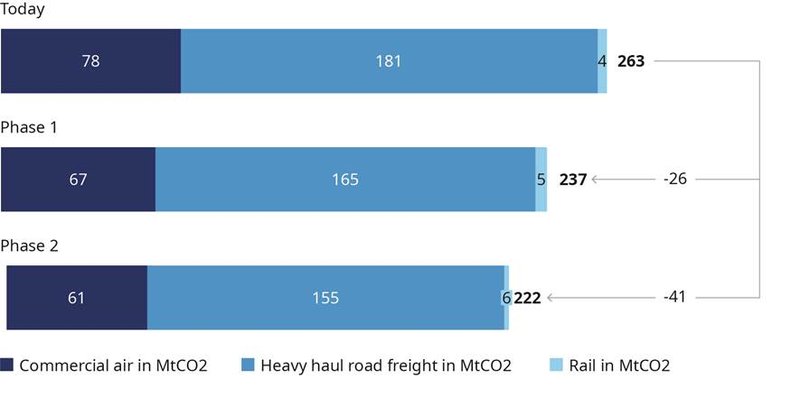


Note: Overall demand will grow in the future but is assumed static in this study for better comparison.

Source: Statista, Oliver Wyman Analysis

MagRail technology has been developed to increase rail network capacity and enhance the capability of existing railway lines, as well as to improve the efficiency of the rail transportation system. MagRail can enable electric vehicles to operate in non-electrified areas, such as terminals and ports. The MagRail system can be integrated into existing rail systems. As a result, the traditional rail transportation system can gain better freight dynamics, higher loading limits, greater flexibility, and the ability to run trains automatically without the need to build new lines, without catenary, and without human error.

‘We are very pleased that a globally renowned management consulting company such as Oliver Wyman has recognized the potential for advanced technologies accelerate the transformation of European long-distance rail transport and make it more efficient and carbon-neutral. After the European Commission confirmed hyperloop as one of the technologies to be supported and promoted as next-generation innovations, we are very excited about the potential of our industry and the role Nevomo will play in shaping it,’ said Stefan Kirch, Chief Commercial Officer & Co-Founder, Nevomo.

MagRail allows gradual improvements to existing networks and is a major technological breakthrough allowing railways to significantly increase their market share and reduce CO2 emissions in transport. The deployment of MagRail technology within existing rail infrastructure allows for cost effective upgrading, enabling rail to become the preferred green, fast, efficient, and interoperable mode of transport for the 21st century.
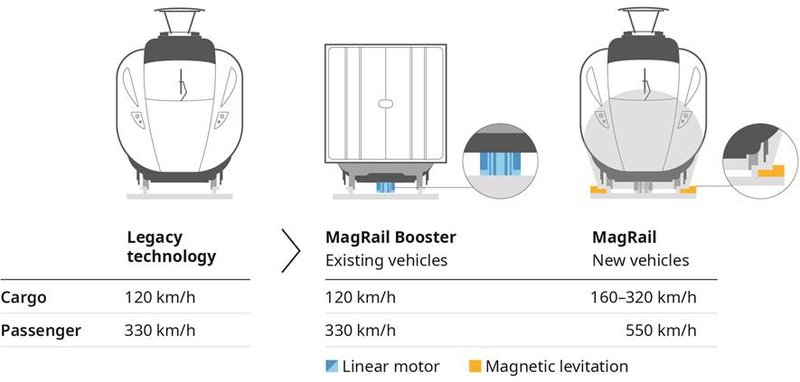
‘Rail in Europe is crucial for the European Green Deal, but capacity is a challenge. Building new lines takes time and land is limited. Faster acceleration and higher train speeds are needed to enhance capacity. Technologies that can be applied to existing rail infrastructure, like passive maglev, would allow for medium-term effects and cost control while leveraging current infrastructure. It is worth investigating for the railway industry and infrastructure operators,’ said Joris D’Incà, Partner at Oliver Wyman

Oliver Wyman’s report also draw attention to the cost side: “Upgrading the north-south corridor with passive maglev, for example, would require investment of approximately €20 billion in total. This includes €3 billion to €5 billion to retrofit passenger trains and about 25% of freight wagons that run on the corridor, and €13-€17 billion for infrastructure upgrades. By comparison, investing in new conventional high-speed rail infrastructure on the north-south corridor to achieve about the same capacity increase would cost approximately €60 billion.”

A full Oliver Wyman’s report “Elevating rail in Europe: technology upgrades for greener transport” can be found at the website Revolutionizing Rail In Europe With Magnetic Levitation Tech