
High-speed MagRail – Hyperloop-inspired.
Rail-ready. Up to 550 kph.
As the climate crisis accelerates, the need for fast, sustainable transport has never been greater. Demand for efficient mobility is set to double in the coming decades and rail must evolve to meet it.
MagRail bridges the gap between conventional trains and future systems. Running at up to 550 kph on existing tracks, it doubles capacity, halves travel time, and slashes emissions. Finally, rail becomes a true competitor to aviation over short to mid-distances.
Nevomo envisions MagRail the next step after MagRail Booster:

Nevomo is currently focusing on MagRail Booster applications. In our vision we foresee further stepwise upgrades of the railway system for highspeed applications. First with levitation to MagRail and maybe later an upgrade to hyperloop.
A new era for high-speed travel. No new railway lines required.


Proven tech. Real results.
Magnetic levitation tested as a prototype.
- Up to 550kph on existing lines.
- Flexible, metro-style operations at intercity scale.
- Just like a metro, but made for long-distance travel.
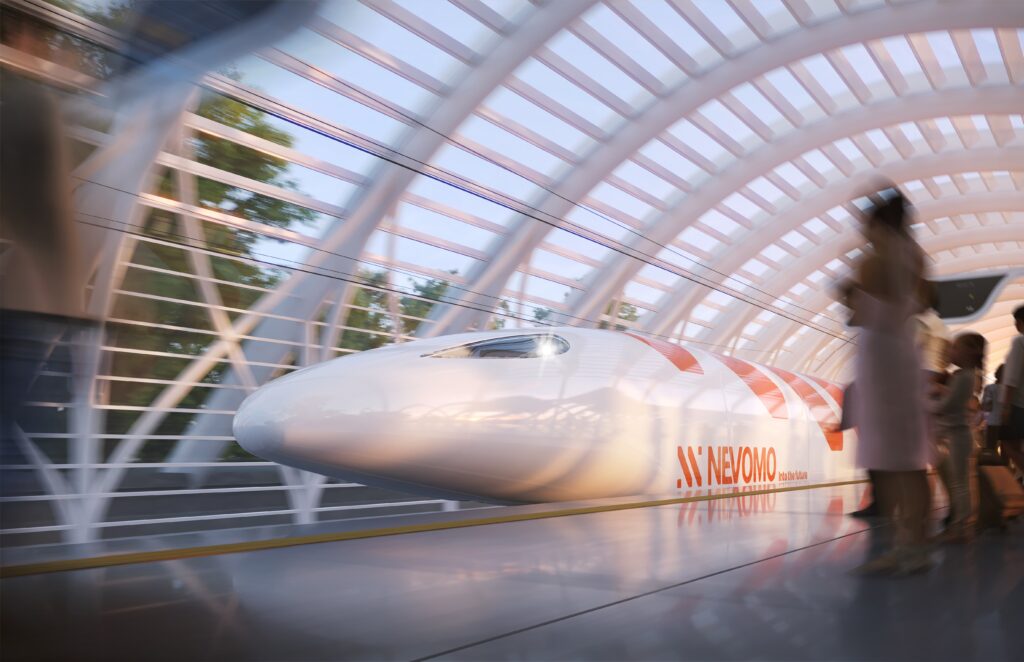
This is high-speed rail, reimagined.
Zero emissions.
Maximum efficiency.
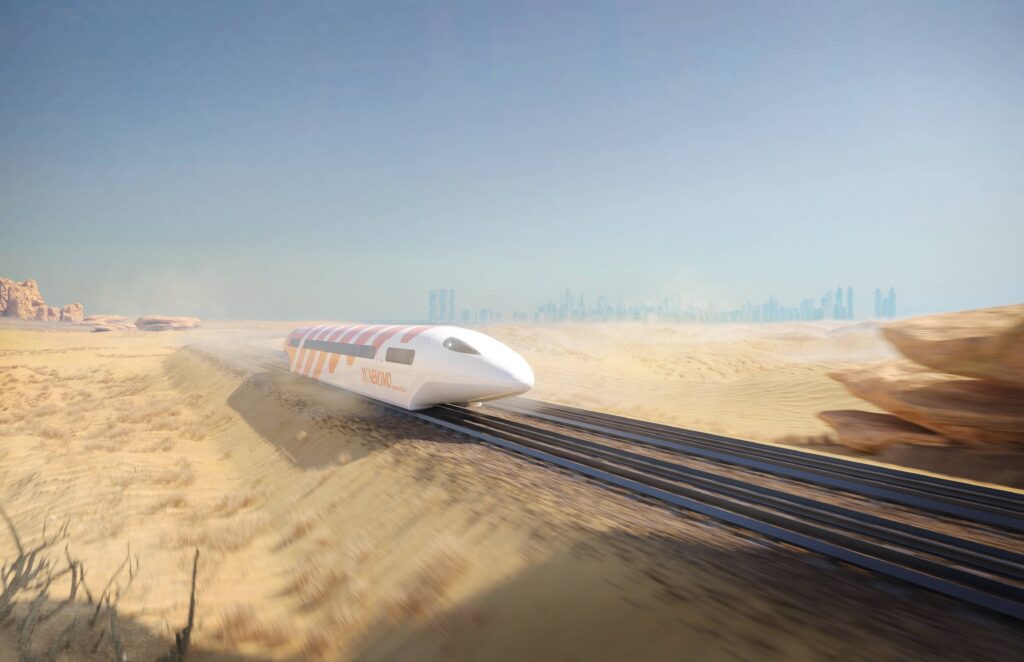
Built for the future and ready today
The solution
Unlike other magnetic rail systems, MagRail is fully interoperable with existing infrastructure. It brings magnetic levitation to conventional tracks – no tunnels, no vacuum tubes. Just smart, scalable upgrade of what we already have.
State-of-play
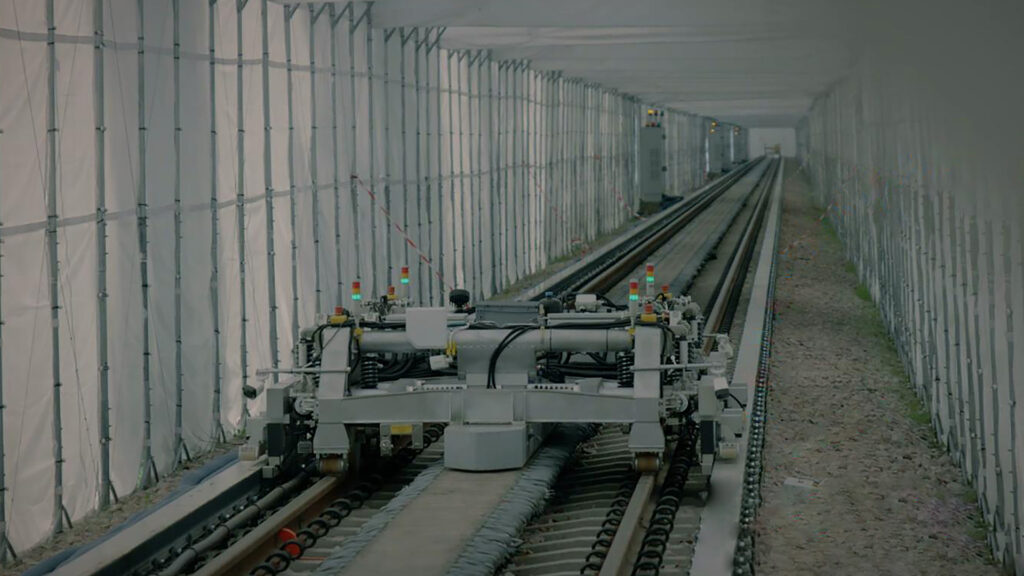
In 2023, MagRail became the first system in the world to demonstrate frictionless magnetic levitation on conventional railway lines.
On a 720-metre test track in Nowa Sarzyna in Poland, a 2-ton vehicle reached 135 km/h and began levitating at just 70 km/h – stable, smooth, and guided magnetically.
Stepwise approach
Existing MagRail Booster infrastructure can be upgraded later on with full MagRail capabilities.
Breakthroughs in hyperloop technology could then be added later also to MagRail, as further upgrades to the legacy railway system
Sustainability
MagRail uses existing rail corridors. It transforms legacy infrastructure into a ultra high-speed network.
Reusing of the existing large railway assets, instead of building new lines is massively reducing land consumption and CO2 emissions.
Download Nevomo’s brochure here